Blog
Are Reclaimed Quoins Right for a Listed Building?

Start with the building, not the stone
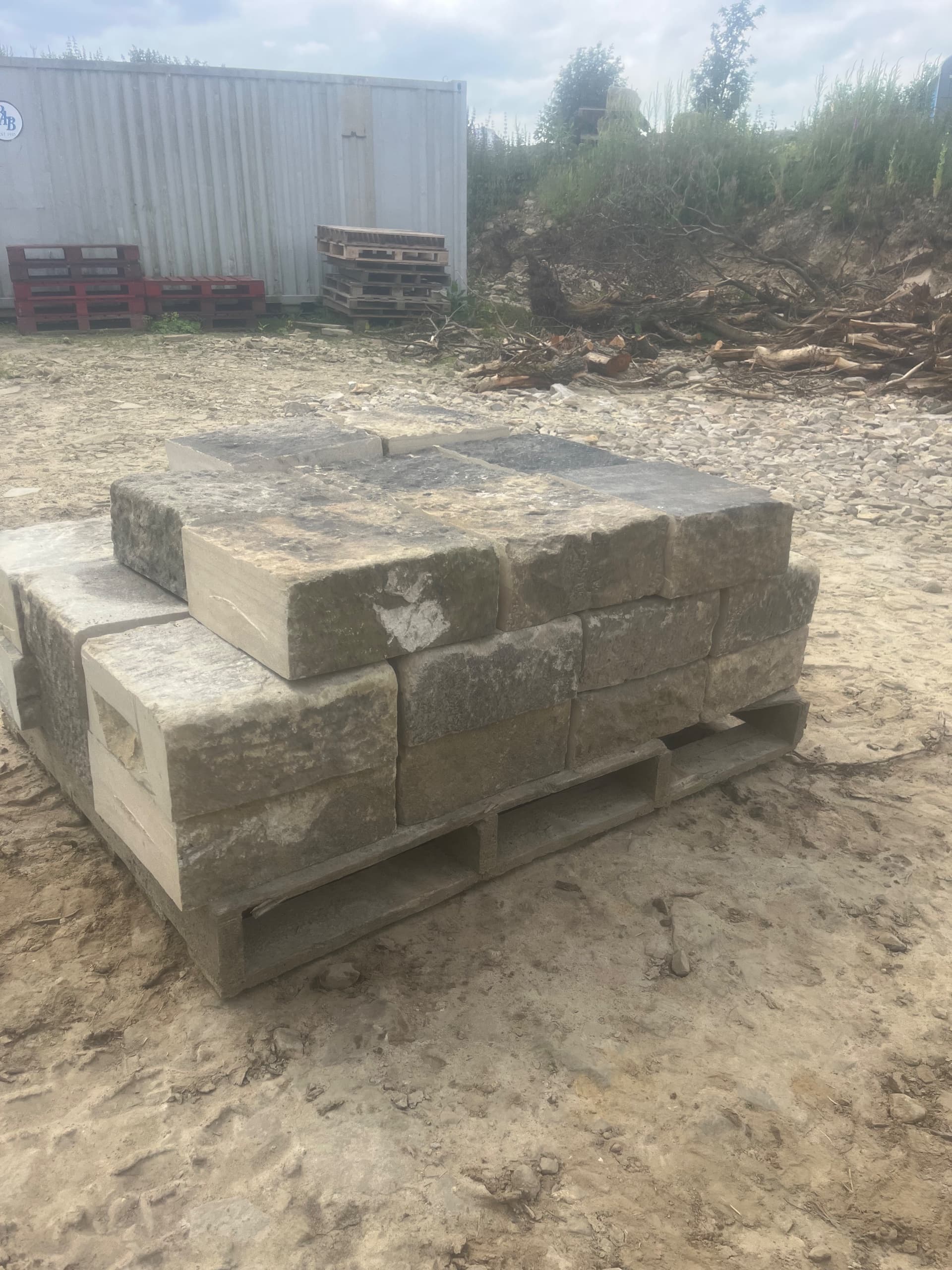
A reclaimed quoin (a stone used at a building’s corner) can look convincingly old and still be the wrong choice for a particular building. The decision is not simply whether the stone is reclaimed. It is whether its dimensions, appearance and physical properties make sense alongside the masonry already there, and whether the proposed work is acceptable for the building.
That matters especially on a listed property, where a corner detail may be part of the building’s character rather than a decorative finishing touch. Before looking at stock, establish what is being repaired or altered and what needs to remain unchanged.
Check what the existing corner is made of
Look at the quoins in context with the wall around them. Note the visible height of each stone, how the courses line up, the width of the joints and the way the corner stones project from the wall face. Also compare the colour and texture of the quoins with nearby masonry. A close match in colour alone may not be enough if the stones have a different face finish or sit at a different scale.
If only a few stones need replacing, the new pieces will sit beside old ones, making differences easier to see. If the corner is being rebuilt, there may be more flexibility in arranging stones, but the overall coursing and character still need consideration. Photographs can help record these details, but measurements and an inspection of the actual masonry give a more dependable basis for choosing sizes.
Do not assume every older-looking stone is suitable. A rough face can be part of its character, while a damaged edge or an unsuitable shape can make it difficult to form a stable, neat corner. The condition of the stone and the way it will be used both matter.
Separate appearance from permission
Reclaimed material may help retain a traditional appearance, but using reclaimed stone does not by itself establish that the work is appropriate or approved. Listed building requirements depend on the building and the proposed work. Before ordering, describe the intended repair or alteration to the local planning authority or conservation officer and check whether consent is needed.
This is worth doing before committing to a particular batch. The acceptable approach may depend on whether you are replacing failed stone, changing the dimensions of a corner, or altering a feature that contributes to the building’s character. Keep the scope clear: replacing like for like and changing the design are not necessarily treated in the same way.
Where a builder or conservation professional is involved, share the proposed stone details with them early. They can advise whether the specification fits the repair and any agreed requirements. Do not treat a supplier’s description, a photograph or the word “reclaimed” as a substitute for that advice.
Decide whether the match is practical
A useful comparison is more specific than “old Yorkshire stone”. Check the face finish, coursing height, stone depth and the shape of the visible corner. Then consider whether the available pieces can be laid in a way that preserves the pattern of the wall. Quoins are often visually prominent, so repeated differences in size or finish may stand out even when individual stones seem close.
There can also be a trade-off between finding a close match and accepting the layout of the stock available. A limited selection might suit a small repair but be less workable for a longer run of corner masonry. If the required sizes are unusual, establish whether the stones can be used as supplied or whether any adjustment is appropriate. Avoid assuming substantial alteration will be acceptable: changing a stone can affect both its appearance and the way it fits.
If you cannot confirm the proposed stone against the building and the agreed scope, pause before ordering. A sample or clear photographs can help with comparison, but the final decision should account for the actual dimensions and condition, not appearance on a screen alone.
A practical decision before you source
Proceed with reclaimed quoins when the proposed work, the material and the conservation requirements align. If they do not, clarify the specification first rather than trying to make an unsuitable stone fit the job. For a listed property in Holmfirth or elsewhere, the same principle applies: the building’s existing details and the scope of work should guide the choice.
We supply Reclaimed Quoin Stones from Holmfirth. If you are weighing up options for a listed building, you can speak with us about the stone you are looking for and use that information alongside advice on the property and any consent requirements.
Other Articles